How to Calm the Mind: The Power of Naam Jap
How to calm the mind with naam jap (divine name chanting). Shri Premanand Ji Maharaj's teachings on inner peace, surrender, and seeing God in all.

The mind never rests. From morning to midnight, a storm of thoughts — and lying in bed at night, that same restlessness. At some point, everyone asks: how to calm the mind. Medication, entertainment, yoga: you've tried it all, and still inner peace slips away.
How to Calm the Mind: Naam Jap Is the Only Answer
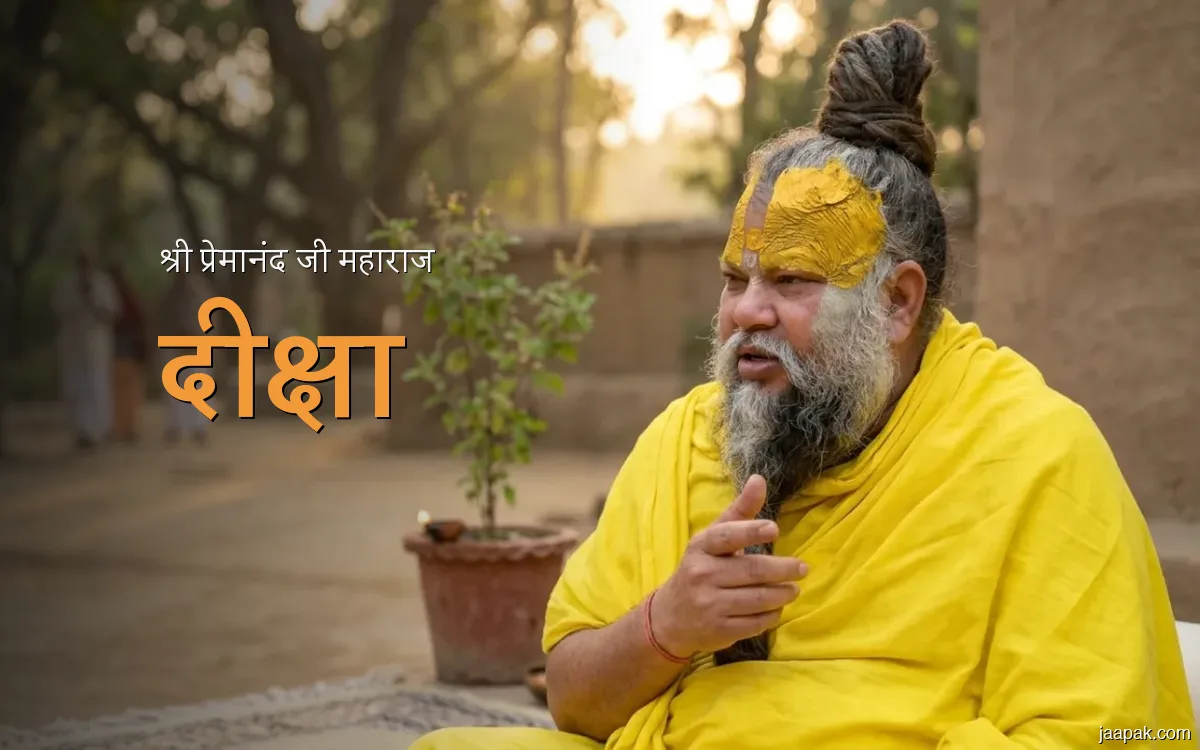
What is the real cause of mental unrest? Shri Premanand Ji Maharaj — a revered saint in the Braj Vaishnav devotional tradition (centered on the sacred land of Mathura and Vrindavan, where Lord Krishna's divine play unfolded) — gives a clear answer: the mind is restless because it is separated from God. When water is cut off from its source, it stagnates. In the same way, a mind severed from the divine cannot find peace.
Medicines suppress symptoms. Entertainment offers a few hours of forgetting. Yoga and meditation are helpful, but they do not sever the root. The root is one: separation from God.
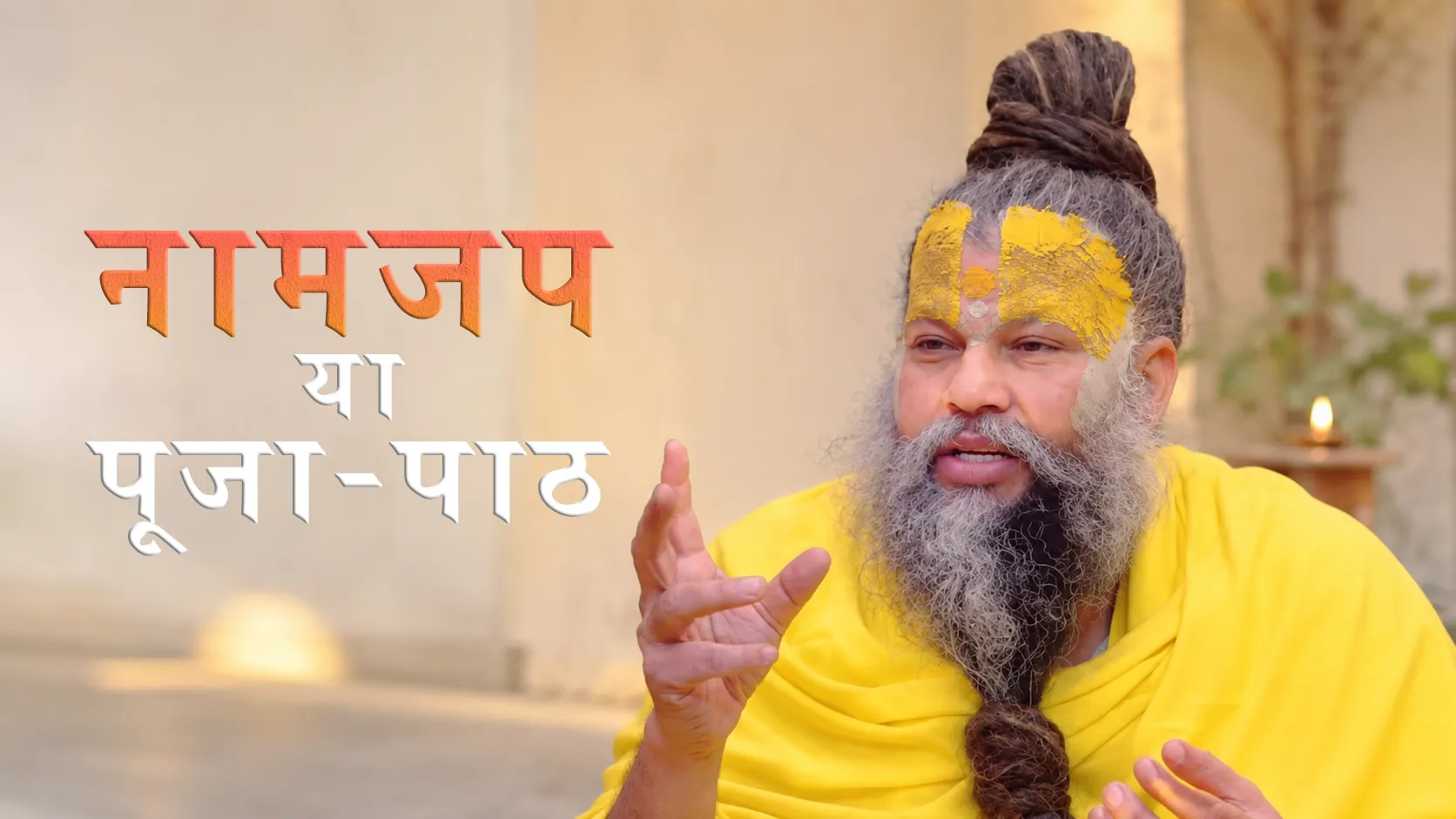
The answer to this question surfaces with striking simplicity in the satsangs of Shri Premanand Ji Maharaj. A devotee named Prem Ratriya Ji once asked: "How can the mind stay peaceful even amidst external noise and chaos?" Maharaj Ji replied directly:
"बार-बार भगवान के नाम का इसे स्मरण और दर्शन कराइए मन को। भगवान के नाम में ही इतनी सामर्थ है कि मन को स्थिर कर देगा।"
"Again and again, let the mind remember and behold the divine name. The name of God has such power that it will make the mind still."
6:33
Naam jap (divine name chanting) reconnects the mind to its original source. When the mind repeatedly hears, sees, and speaks "Radha" — the name of Shri Radha, the divine beloved of Lord Krishna — it has no opportunity to wander. Gradually, interest awakens, feeling (bhav) arises, and stillness follows.
But the mind does not surrender easily.
Taming the Mind Is a Battle: The Practice of Patience
Anyone who has started naam jap will recognize this frustration: "I've been chanting for weeks, and my mind is still unsettled." This is natural. Maharaj Ji's answer is direct:

"पर ये लड़ाई है! ये एक युद्ध है। इसमें लड़ना पड़ेगा। यह ऐसा नहीं है कि दो चार 10 दिन में कब्जे में आ जाएगा।"
"But this is a fight! This is a war. You will have to fight it. It is not going to come under your control in ten or twenty days."
8:06
The mind has been conditioned across lifetimes. In an instant, it races in a thousand directions. Breaking this ancient habit requires long, sustained practice.
This battle must be fought alone. No one else can fight it for you. A guru shows the path, but the seeker must walk it. The only real defeat is quitting.
Maharaj Ji speaks of "deerghkaal nirantar" — long duration, without interruption. Practice continuously over a long time. The scriptures promise: the practitioner becomes siddha (perfected), freed from the fear of death, and worldly desires fall away entirely.
Consistent Practice: Even in Adverse Conditions
The mind will wander. This is certain. In the middle of work, in conversation, before sleep: the mind will go outward. There is no need to feel irritated. Simply drag it back.
Maharaj Ji said:
"इसलिए खूब नाम जप करो। बार-बार जाते हुए मन को घसीट कर नाम में लगाओ। ऐसा अभ्यास करते रहो।"
"So chant the name abundantly. Again and again, drag the wandering mind back and fix it on the name. Keep practicing like this."
8:53
In another satsang, Maharaj Ji taught that naam jap should continue while eating, bathing, speaking with others. Continuity matters more than quantity. Whether you do a hundred rounds on a mala (prayer beads) or ten, what counts is regularity — without a single day's gap.
It is easy to chant when conditions are favorable. The real practice is continuing when the mind says "not today" or "I'm too tired." External circumstances keep changing; the thread of the divine name must not break.
Alongside consistent practice, there is one more subtle point. What you eat and whose company you keep has a deep effect on the mind. A story illuminates this.
The Story of Siddha Balram Das Baba Ji and the Purity of Food
In Vrindavan (the sacred town on the banks of the Yamuna river, central to the Braj devotional world), near the Jhaadu Mandal, a perfected saint named Siddha Balram Das Baba Ji sat beneath a tree. Women were bathing in the Yamuna nearby. And in that elderly, perfected saint's mind, a sudden wave of lust arose.

A true saint's heart is transparent. He immediately called all his disciples and announced: "I will enter the Yamuna and leave this body." His disciples asked why. Baba Ji replied: "A sinful thought has arisen in my mind."
The disciples quickly took him on a parikrama — a circumambulation of Vrindavan's sacred perimeter. The power of this holy land is beyond measure: by the time the circumambulation was complete, that impure feeling had vanished entirely.
Then Baba Ji asked: "Where did yesterday's prasad come from?" It was discovered that at the Govind Dev Ji temple, a woman of ill repute had made an offering using money earned through wrongful means. That very prasad had reached the perfected saint. The intention behind food travels with it to the one who consumes it: even a siddha was not immune.
Thakur Ji (Lord Krishna) then consoled Baba Ji: "The entire universe is mine. Whatever offering is made, I receive it. But you: take only a small portion of prasad. Do not eat your fill."
The lesson is plain. Purity of food, company, and environment prepares the ground for naam jap. External purity and regular practice, when they work together, deepen surrender naturally.
How Surrender Deepens: Letting Go of Other Supports
Sanjay Ji from Nimach asked: "It has been a year since I surrendered to God. How do I know if that surrender is deepening?" Maharaj Ji's answer was direct and measurable:
"अन्य आश्रय, अन्य बल, अन्य संबंध, अन्य चिंतन जितना हटता जाएगा, उतने ही शरणागति पुष्ट होती चली जाएगी।"
"As other supports, other strengths, other relationships, other thinking fall away — to that same degree, surrender to God deepens."
15:26
The more external props you release (position, wealth, others' approval), the deeper surrender becomes. A simple test: in a crisis, who comes to mind first — God, or the world?
When the mind begins to stabilize in awareness of the divine, signs appear. Fearlessness and ease settle in. Interest in devotional practice grows. Even in adversity, faith does not waver. An inner aliveness persists.
The greatest fruit of deepened surrender: the capacity to see the divine in everyone.
With a Pure Mind, Seeing the Divine Everywhere
Panduranga Ji asked: "How can I see God in every being, when that feeling disappears the moment someone behaves unkindly?" Maharaj Ji offered the example of electricity: an air conditioner gives cold, a heater gives warmth, but the electricity running through both is one and the same. The divine power at work in both pleasant and unpleasant behavior is one.
"पवित्र मन से सब में भगवान को देखा जाता है।"
"With a pure mind, God is seen in all."
9:42
When you look at actions and personalities, the divine disappears. When you look at the divine, actions and personalities fade into the background. Both cannot be seen at once; you must choose. This choice becomes possible only through long, sustained naam jap.
Seeing the divine in a learned brahmin, in a dog, in an outcaste, in an elephant: this is what the scriptures call the mark of a true pandit (wise one). This is the final fruit of naam jap. The mind is now calm, because it sees its home everywhere.
Frequently Asked Questions

Independent writer, jaapak.com
I built the Jaapak app. I write in simple Hindi on the Bhagavad Gita and the satsang tradition — so seekers don't struggle with the scripture.
Read all articlesAbout this article
The commentary is based on the general understanding of the Sanatan tradition and written in accessible language. No verbatim quotation of any modern commentator is used.