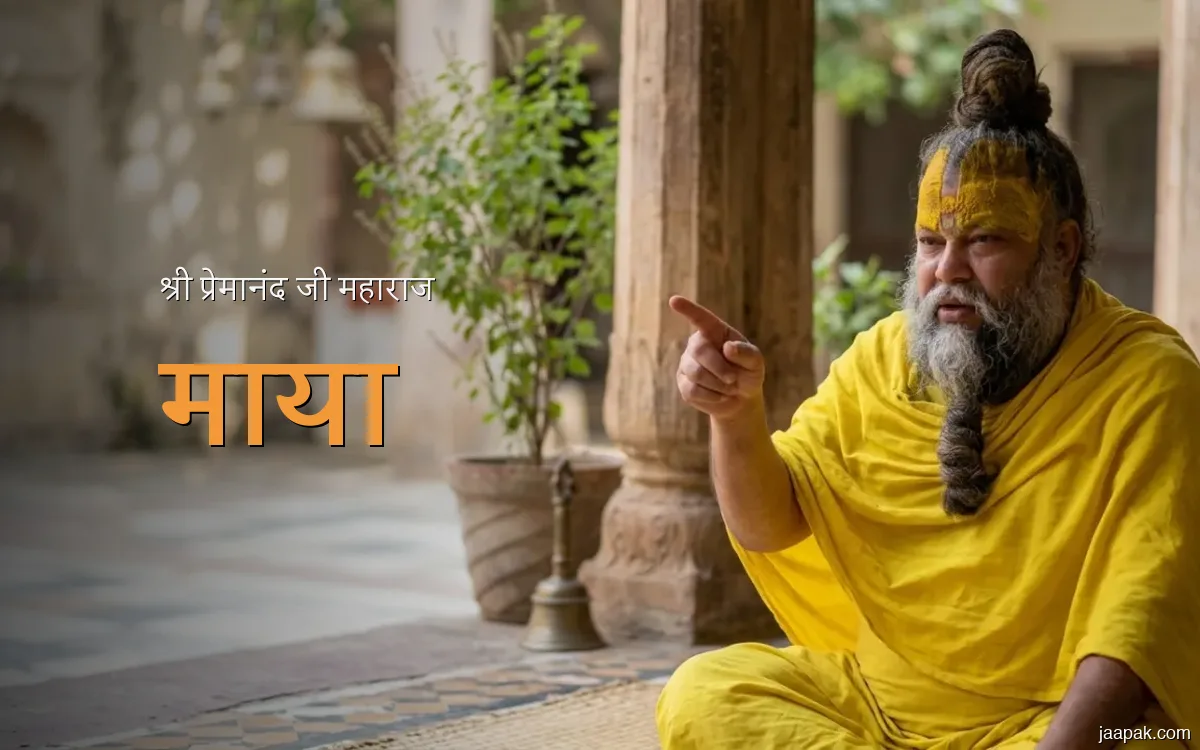
Householder Bhakti: Premanand Maharaj's Complete Guide
Premanand Maharaj on householder bhakti (grihastha): turn duty into worship, save your marriage, raise devoted kids, find God without leaving home.
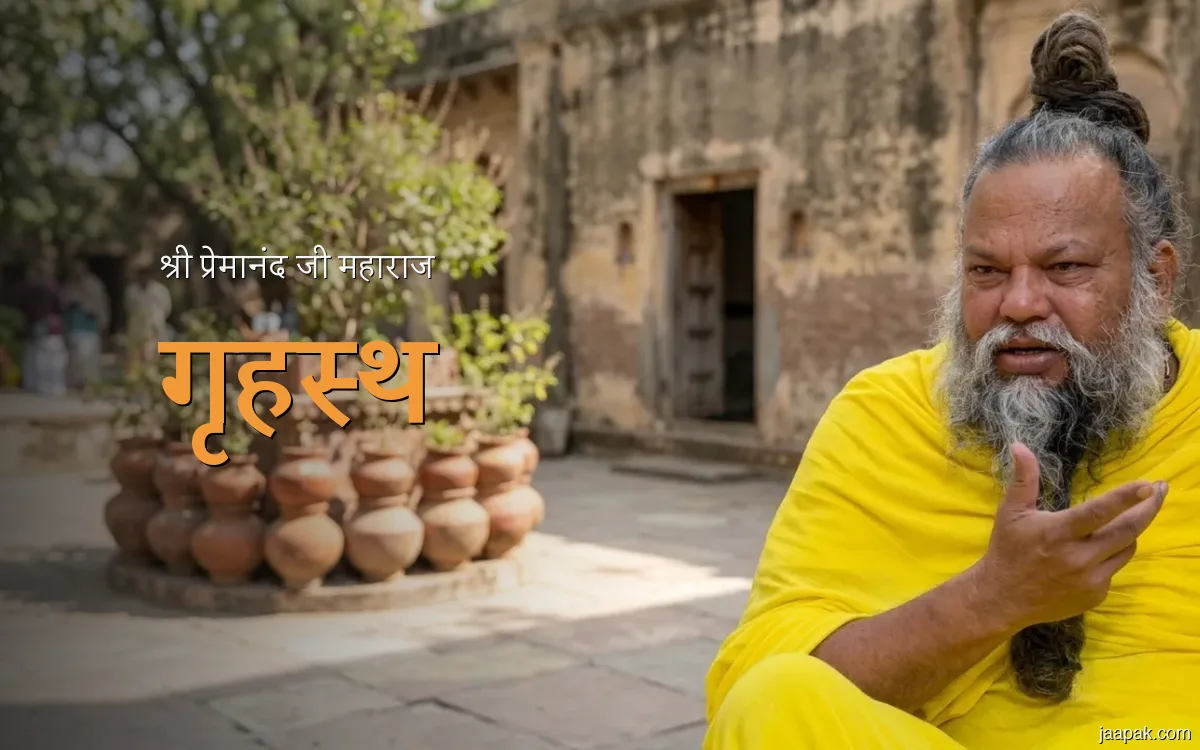
Why Read This Guide on Householder Bhakti?
You have a job, a spouse, kids, a mortgage, ageing parents. The day starts with school lunches and ends with unanswered email. And somewhere underneath all that, a quiet question keeps surfacing: is real spiritual life even possible for someone like me?
Most of us were taught it isn't. Bhakti is for monks. Sadhana is for forest dwellers. The householder, we're told, is too tangled in maya (the web of worldly illusion) to ever truly know God.
Shri Premanand Ji Maharaj, a revered saint of Vrindavan, the Braj-region pilgrimage town centered on Radha and Krishna, dismantles this assumption again and again. According to him, householder bhakti (grihastha bhakti) is not just possible. The householder path (grihastha) is the very ground from which all bhakti grows.
This guide distills Maharaj Ji's teachings from 38 different satsangs on a single theme: how the householder turns family life, work, and duty into the highest form of worship.
One Tulsidas chaupai (a couplet from the Ramcharitmanas) keeps surfacing across these talks. Maharaj Ji cites it in at least seven distinct discourses:
"नाथ सकल संपदा तुम्हारी। मैं सेवक समेत सुत नारी।।"
"Lord, all wealth is Yours. I, along with my children and wife, am only Your servant."
That single line is the seed of householder spirituality. The family, the property, the self, all of it belongs to God. I am simply the caretaker. The day this feeling settles into the heart, householder life turns into sadhana.
The Greatness of Householder Life: "The Root of Everything"
Indian society long held that renunciation (sannyas) is the highest path and household life is a hindrance. Maharaj Ji challenges that idea head-on.
"गृहस्थ धर्म सबसे बड़ा मूल है। इसी गृहस्थ से संत उपजते हैं। इसी गृहस्थ में भगवान का अवतार होता है।"
"The householder's dharma is the greatest root. Saints are born from the householder. God Himself takes avatar in the householder."
3:36
"मनुष्य जीवन में गृहस्थ धर्म बहुत बड़ा श्रेष्ठ धर्म है जिसमें संत भी प्रकट होते हैं और संतों का पालन पोषण भी गृहस्थ धर्म से होता है।"
"In human life the householder's dharma is supremely noble. Saints appear within it, and saints are also raised and supported by it."
1:06
Even renunciate monks depend on the householder for their daily food:
"हम जितने विरक्त जन हैं गृहस्थी में ही पैदा हुए... और चाहे जितना बड़ा महापुरुष हो, यह भिक्षा गृहस्थ से ही मिलती है।"
"All of us who live as renunciates were born in households... and however great a sage may be, his alms come only from the householder's door."
43:16
Three Reasons the Householder Path Comes First
- Source of saints. Every great teacher is born to householder parents.
- Ground of avatar. Ram, Krishna, all the divine descents took place inside householder families.
- Refuge of renunciates. The wandering monk's begging bowl is filled at the householder's door.
The householder's life is not an obstacle to bhakti. It is the foundation on which bhakti stands.
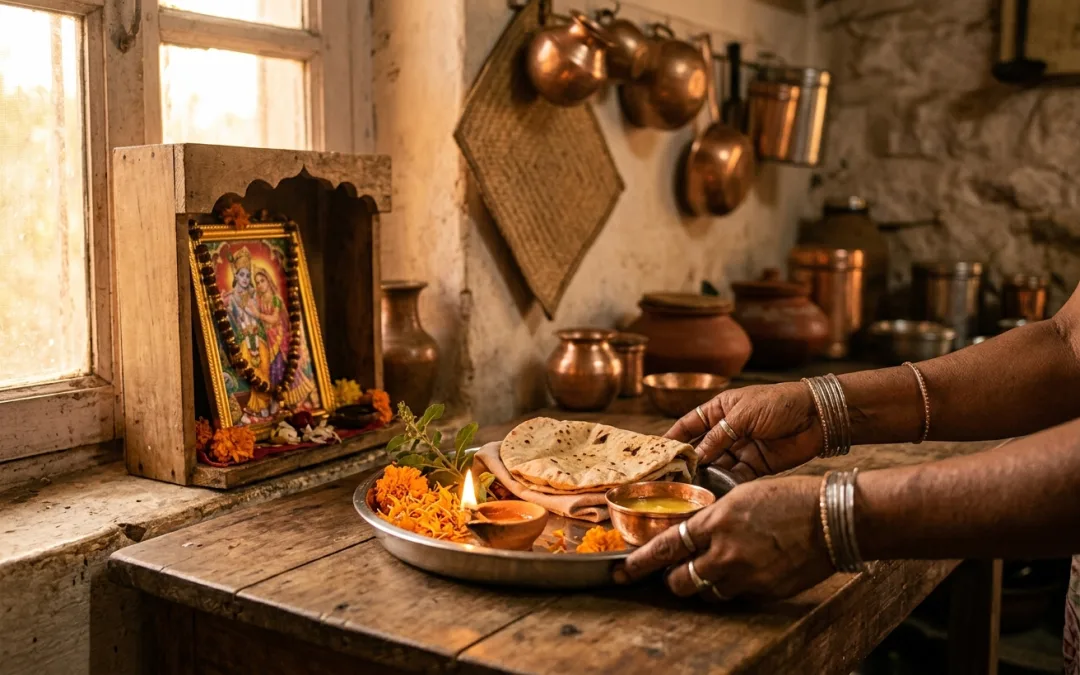
Duty as Worship: The Practical Path of Householder Bhakti
"I just don't have time to go to the temple." That is the universal complaint of the householder. Maharaj Ji's reply is disarmingly simple: the work you are already doing is the worship.
"जो कर्म कर रहे हो वो भगवान को अर्पित करते जाओ और नाम जप करते जाओ और यह सोचो कि यह मैं सब प्रभु के लिए कर रहा हूं।"
"Whatever work you are doing, keep offering it to God, keep chanting His name, and hold the thought: 'I am doing all of this for the Lord.'"
44:11
"अपने कर्तव्य को ही पूजा समझे। कर्तव्य में भय और प्रलोभन का त्याग करके... तो हमारी कर्तव्य पूजा हो जाएगी।"
"Treat your duty itself as worship. Drop fear and temptation while doing it, and your duty becomes worship (kartavya-puja)."
0:14
"सबसे बड़ी पूजा है अपने कर्तव्य का पालन करना जो भगवान ने हमें कर्तव्य दिया।"
"The greatest worship is fulfilling the duty God has given you."
0:42
A Lesson From a Supreme Court Judge
In one satsang, a sitting Supreme Court Judge told Maharaj Ji, "While I work, the remembrance of God keeps flowing inside me." Maharaj Ji praised this lavishly and called it true bhakti. A judge delivering verdicts, a mother raising a child, a shopkeeper trading honestly: if the work is done with God in mind, that itself is bhakti.
Three Working Principles
| Principle | What It Means |
|---|---|
| Offering | Whatever you do, do it as an offering to God |
| Remembrance | Keep the inner chant of the divine name running while you work |
| Intention | Hold the feeling, "I am doing this for the Lord" |
These three together transform the householder into a saint without leaving home.

Marriage as Sadhana: Love, Trust, and Devotion Between Spouses
Maharaj Ji's teaching on the husband-wife relationship is unusually clear-eyed and practical.
What a Healthy Marriage Looks Like
"अगर मैं मुस्कुरा देती तो मेरा पति मुस्कुरा देता है। वो आनंदित हो जाता है। ये बात होनी चाहिए।"
"If I smile, my husband smiles too. He becomes joyful. That is how it should be."
36:05
"हम भावना करते हैं आप मेहनत करके आठ घंटे कहीं से भी और जब घर पहुंचते हैं और आपको दौड़ के बाहर स्वागत करती है।"
"Picture this: you have worked hard for eight hours somewhere, and when you reach home, she runs out to welcome you at the door."
11:35
Trust: The Foundation of the Home
"जब बढ़ेगा पति-पत्नी में अविश्वास तो गृहस्ती चौपट हो जाएगी।"
"Once distrust grows between husband and wife, the household is finished."
11:25
Maharaj Ji also looks honestly at the wounds of modern society:
"पति किसी और के साथ जा रहा है। पत्नी किसी और के साथ जा रही है। लड़ाई झगड़ा होता है, मारपीट होती है, हिंसा होती है।"
"The husband is going off with someone else. The wife is going off with someone else. Quarrels happen, blows happen, violence happens."
39:17
"जब हमारी अभ्यास वृत्ति चार पुरुषों से मिलने की हो जाएगी, चार लड़कियों से मिलने की हो जाएगी तो हमारा गृहस्थ धर्म नष्ट हो जाएगा।"
"When our habit becomes meeting four men, meeting four women, our householder's dharma is finished."
35:39
When the Marriage Feels Heavy
For people who feel "trapped" in household life, Maharaj Ji's answer is striking:
"तो नाटक ही करो ना, क्या परेशानी! पति का नाटक करने में क्या परेशानी? पति तो प्रभु है... राधा राधा नाम जप करो। बढ़िया पार हो जाओगे।"
"Then play the role, what's the trouble? Where's the difficulty in playing 'husband'? The husband is the Lord Himself... Chant Radha, Radha. You will cross over beautifully."
0:18
The word "play" is profound. Maharaj Ji is saying: take your role inside God's lila (divine play), but do not get lost in it. The marriage is part of the lila. Seen with that vision, the same bond that felt like bondage becomes a doorway to freedom.
For the practical groundwork of warmth in family relationships, see Maharaj Ji's five principles in detail: The 5 Sutras of Apnapan: Maharaj Ji's Practical Guide to Belonging.
Householder vs. Renunciate Path: Which One Is Right for You?
People often ask, "Should I take sannyas? Can a householder really attain liberation?" Maharaj Ji answers this with great care.
A Striking Image
"गृहस्थ धर्म में विषयों पर विजय प्राप्त करना मानो किले के अंदर रहकर लड़ाई लड़ना और विरक्त का है पूरे चौड़े पर युद्ध करना।"
"Conquering the senses as a householder is like fighting from inside a fort. The renunciate fights in open ground."
3:14
The fort is protected from within. The householder has the walls of rules, family, and responsibility shielding him from outside temptations. The renunciate fights in the open field with no armor, no shelter.
A Stern Warning About the Renunciate Path
"यदि विरक्त मार्ग में कदम रखो तो आजीवन जलना है। यह हमारा शब्द याद रख लो। जलना है। सिर्फ जलना है।"
"If you step onto the renunciate path, you must burn for the rest of your life. Remember these words. You will burn. Only burn."
7:48
"विरक्त में उसे जाना चाहिए जिसने जीवित मर जाए।"
"Only the one who can die while still alive should step onto the renunciate path."
25:23
"बहुत सोच समझकर विरक्त मार्ग में कदम रखना चाहिए... आजीवन नियम में रहना, कहीं न कहीं चूक न हो जाए।"
"Step onto the renunciate path only after deep reflection... You must live by strict rules for life. One slip and the path is broken."
Maharaj Ji's clear advice: unless you have an unshakeable lifelong resolve for celibacy, the householder path is better.
The Final Unity of Both Paths
Alongside these warnings, Maharaj Ji refuses to rank one path above the other:
"हम दोनों घर पहुंचते हैं एक ही, हम दोनों के मिलने वाले पिता एक ही हैं।"
"We both reach the same home. The Father we are both meeting is one and the same."
42:58
"वैरागी मार्ग में चलते हुए जो गति भगवान की प्राप्त करते हैं, वही गृहस्थ में भी।"
"The state of God-realization attained on the renunciate path is attained in householder life as well."
3:53
One destination. Two paths. The path that fits your nature is the one for you.

Love vs. Attachment: How to Stay Free While Living Inside a Family
The greatest challenge of householder life is the difference between love (prem) for family and attachment (moh) to family. Maharaj Ji draws this line beautifully.
"भगवत भावना करके प्रेम करो। अभी आनंद आ जाए... मोह के कारण आपकी दुर्गति होती है और प्रेम करो तो उसमें भी भगवान है।"
"Love them with the feeling that God is in them. Joy will arise immediately... Attachment causes your downfall, but if you love, God is right there inside that love."
38:48
"पत्नी से प्रेम करो, पुत्र से प्रेम करो, माता-पिता से प्रेम करो... प्रेम तभी होता है जब हम भगवान देखते हैं।"
"Love your wife, love your son, love your parents... Real love happens only when we see God in them."
38:58
Attachment vs. Love (with God-Awareness)
| Attachment (moh) | Love (prem with God-vision) | |
|---|---|---|
| Vision | You see only the family | You see God shining through the family |
| Result | Suffering, bondage, ruin | Bliss, freedom |
| Inner state | Anxiety, anger, fear | Peace, grace |
| Core feeling | "This is mine" | "Lord, all is Yours" |
The Philosophical Ground: Body vs. True Self
Maharaj Ji also offers a deep metaphysical insight:
"गृहस्थ धर्म और विरक्त धर्म ये शरीर के हैं, ना कि स्वरूप के हैं। स्वरूप से हम सब भगवत धर्म वाले हैं।"
"Householder dharma and renunciate dharma belong to the body, not to the soul. In our true nature, we are all dharma of God."
5:35
"स्वरूप में तो जो हम हैं सो तुम हो। जो तुम हो वही सब रूपों में है।"
"In essence, what I am, you also are. What you are is what shines in every form."
5:53
For the practical method of finding God while living inside maya, read: How to Escape Maya: The Real Path of Naam Jap.
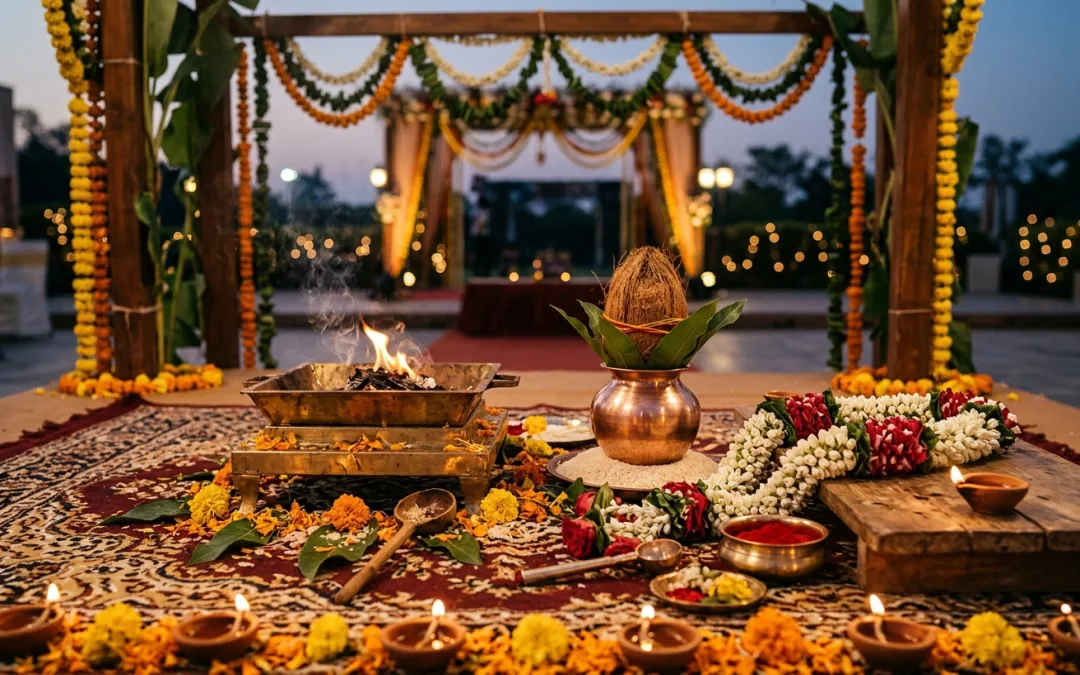
The Sanatan Marriage Tradition and Today's Society
Maharaj Ji honors the Sanatan (eternal Hindu) marriage tradition, and he speaks honestly about its erosion in our time.
"जब तक ब्याह नहीं होता था बच्चे ब्रह्मचर्य रहते जानते ही नहीं थे संसार... जब ब्याह हुआ तो आजीवन एक दूसरे की गलतियों को सहते हुए वो एक ही घर में रहते। तलाक शब्द हमने कभी नहीं सुना।"
"Until the wedding, children remained in brahmacharya (celibacy). They knew nothing of the world... Once married, they lived in a single home for life, bearing each other's faults. The word 'divorce' we had never heard."
47:33
"लड़की लड़के को तब देखती थी जब मंडप पर बैठा होता था। और लड़का लड़की को तब देखता था जब घर में पहुंच जाती थी। लेकिन आजीवन दोनों निर्वाह करते थे। खूब बढ़िया संतान और खूब परिवार।"
"The bride saw the groom only when he sat at the mandap. The groom saw the bride only when she arrived at his home. Yet both upheld the bond for life. Excellent children, abundant family."
43:04
The message is not about returning to arranged marriage. It is about something deeper: commitment and patience matter more than prior compatibility. When two people enter a marriage with the firm resolve to stay for life, the family flourishes.
Key Scriptural Teachings Cited by Maharaj Ji
1. The Central Chaupai: The Whole of Householder Spirituality in One Line
"नाथ सकल संपदा तुम्हारी। मैं सेवक समेत सुत नारी।।"
"Lord, all wealth is Yours. I, with my children and wife, am only Your servant."
Maharaj Ji treats this as the root mantra of householder bhakti. Family and all, everything belongs to God. I am only the servant. Once this feeling settles into the heart, attachment loosens of its own accord.
2. The Prayer for Constant Love
Maharaj Ji also draws on another Tulsidas chaupai. The prayer asks: just as a lustful person constantly craves a woman, just as a greedy person constantly craves wealth, may Shri Raghunath ji feel just as constantly dear to me. That same prayer is just as essential for the householder, to want God with that intensity even while living in the middle of the world.
Maharaj Ji's Story of the Pativrata
Source: Bhajan Cannot Happen in Householder Life! — Maharaj Ji's satsang
A wandering ascetic once arrived at the door of a devoted wife (a pativrata, devoted to her husband as Lord) in a village to ask for alms.
She first needed to seek her husband's permission, so there was a slight delay.
The ascetic grew angry. He said, "Don't think of me as some forest crow that you can burn me to ash with a glance."
The saintly woman, perfectly calm, then described every single detail of the ascetic's spiritual practice, as if it were all visible to her.
The ascetic was stunned. He asked, "How could you possibly know all this?"
She answered:
"मैं अपने पति को भगवान मानती हूं। कभी पर पुरुष का स्पर्श नहीं किया और भगवान का चिंतन करती हूं। पति की सेवा करती हूं। मुझे तीनों काल [का ज्ञान है]।"
"I treat my husband as God. I have never touched another man and I contemplate the Lord. I serve my husband. To me, all three times [past, present, future] are known."
The lesson is clear: pativrata dharma is not just a domestic rule, it is a tapasya (spiritual austerity). To fulfill the householder's duty with complete devotion is the highest sadhana. That woman did not retreat into the forest. She adopted no special ritual. She simply treated her duty as the worship of God.
How to Begin Householder Bhakti: 5 Practical Steps
The whole of Maharaj Ji's teaching distills into five working steps:
1. Plant the Chaupai in Your Heart
"नाथ सकल संपदा तुम्हारी, मैं सेवक समेत सुत नारी"
"Lord, all wealth is Yours. I, with my children and wife, am only Your servant."
Repeat it every morning. Practice the feeling that the family is not "mine" but God's. Wife, husband, children: all belong to the Lord. I am simply the servant.
2. Turn Duty Into Worship
Whatever you do, cooking, going to the office, helping a child with homework, hold the inner thought: "I am doing this for God." A judge giving a verdict with God in mind, a mother feeding a child with God in mind: that itself is bhakti.
3. Weave Naam Jap Into Daily Life
While walking, sitting, working, keep the inner chant of "Radha-Radha" or your chosen divine name running. Naam jap and duty can flow together. That is the householder's special advantage. The detailed method appears in How to Escape Maya: The Real Path of Naam Jap. For the complete Radha-naam method (mala, mantra, time, count, the ten name-offenses), see: How to Chant Radha's Name: The Simplest Path to Overcoming Maya.
4. See God in Your Family
See God shining in your spouse. See God's form in your children. This is not attachment, this is divine love. Once that vision arrives, the same relationships that once felt like bondage become a vehicle for bhakti.
5. Make the Home a Sacred Atmosphere
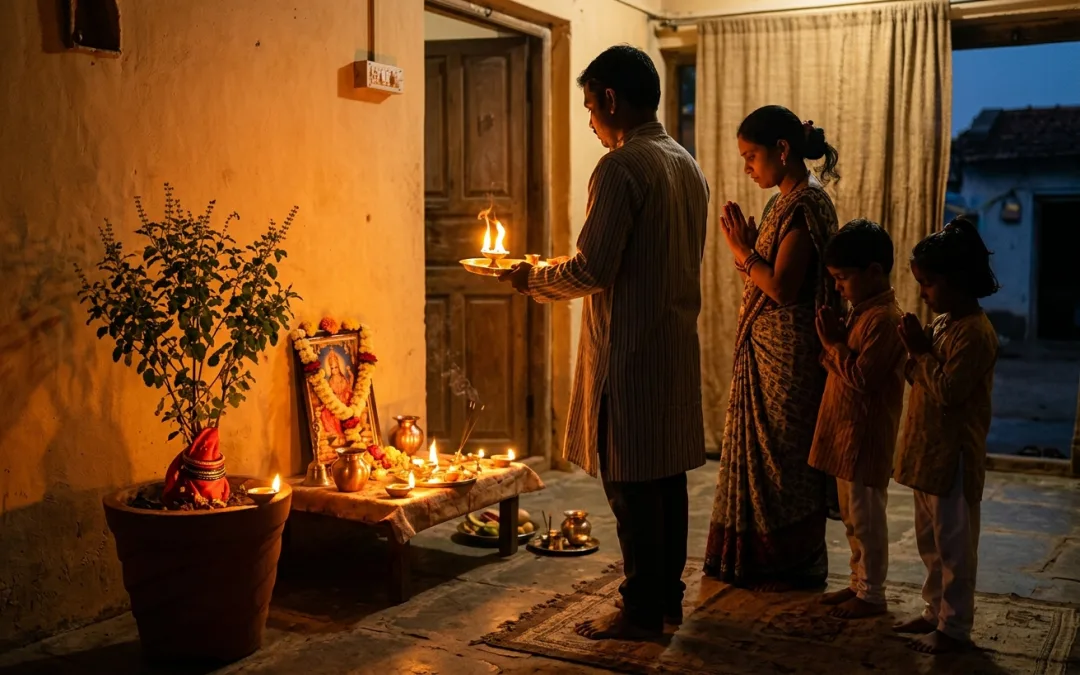
Morning and evening bhajan, tulsi worship, listening to satsang together: these small habits shift the whole family. Children pick up sanskaras not from a school, but from watching their parents live.
This guide is compiled from the satsangs of Shri Premanand Ji Maharaj. The teachings presented here rest on Maharaj Ji's own words. For personal sadhana questions, take refuge in a sadguru (true spiritual teacher).
All images in this article were digitally generated.
Frequently Asked Questions

Independent writer, jaapak.com
I built the Jaapak app. I write in simple Hindi on the Bhagavad Gita and the satsang tradition — so seekers don't struggle with the scripture.
Read all articlesAbout this article
The commentary is based on the general understanding of the Sanatan tradition and written in accessible language. No verbatim quotation of any modern commentator is used.